





When exploring non-surgical facial rejuvenation, two treatments frequently appear in conversations: Platelet-Rich Plasma (PRP) and dermal fillers. Although both are commonly used in aesthetic medicine and may improve the appearance of aging skin, they work in fundamentally different ways.
PRP focuses on stimulating the body’s natural healing processes, while fillers provide immediate structural support and volume. Understanding these differences can help patients better appreciate why a medical provider may recommend one treatment, the other, or in some cases, a combination of both.
Platelet-Rich Plasma, commonly called PRP, is created using a small sample of the patient’s own blood.
The blood is placed into a centrifuge, where it is spun at high speed to separate its components. This process concentrates the platelets into a layer of plasma that contains a high concentration of naturally occurring growth factors.
These growth factors play an important role in tissue repair and regeneration.
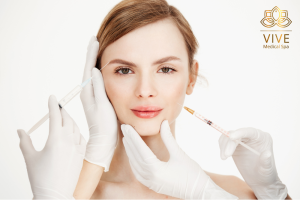
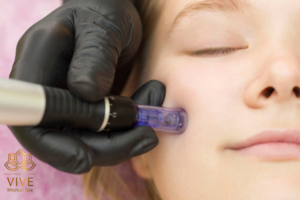
Once prepared, PRP may be injected into targeted areas or combined with treatments such as microneedling to stimulate the skin’s natural renewal process.
Dermal fillers are injectable products designed to restore lost volume, improve facial contours, and soften certain wrinkles.
The most commonly used fillers today are made from hyaluronic acid, a substance naturally found in the body that helps retain moisture and provide structural support to tissues.
Unlike PRP, fillers do not rely on the body’s healing response. Instead, they physically occupy space beneath the skin, creating immediate support and contour.
The primary purpose of PRP is to encourage the body to repair itself.
Growth factors released by concentrated platelets help stimulate:
Because these biological processes take time, improvements develop gradually over several weeks and months.
PRP works by enhancing skin quality rather than adding volume.
Dermal fillers serve a different purpose.
They are commonly used to:
Since fillers provide immediate structural support, many patients notice visible changes soon after treatment, although final results are assessed once any temporary swelling subsides.
One feature that distinguishes PRP from fillers is that it is entirely derived from the patient’s own blood.
No synthetic filling material is injected.
Because PRP is autologous (originating from the same individual), the risk of allergic reactions is generally very low.
However, suitability still depends on the patient’s overall health and medical history.
Modern fillers are manufactured under strict medical standards and are designed to integrate smoothly into facial tissues.
Different filler formulations vary in:
Your provider selects the appropriate product based on your facial anatomy and treatment goals.
Because the two treatments work through different mechanisms, their timelines also differ.
With PRP:
With fillers:
PRP is commonly used to improve overall skin quality by supporting natural regeneration.
It may be considered for concerns such as:
Rather than dramatically changing facial shape, PRP focuses on improving the condition of the skin itself.
Dermal fillers are primarily used when structural enhancement or volume restoration is desired.
Common treatment areas include:
The objective is to restore facial balance while maintaining natural proportions.
Yes.
Because PRP and fillers work through complementary mechanisms, many providers use them together as part of a comprehensive facial rejuvenation plan.
For example:
The ideal treatment plan depends on each patient’s anatomy, concerns, and aesthetic goals.
Every face ages differently.
During a consultation, your provider evaluates:
This assessment helps determine whether PRP, fillers, or a combination of treatments is most appropriate.
Although PRP and dermal fillers are both popular injectable treatments, they work through entirely different mechanisms. PRP stimulates the body’s natural healing response to improve skin quality over time, while fillers provide immediate structural support and restore lost facial volume. Understanding these differences allows patients to make informed decisions about their aesthetic care.
At VIVE Medical Spa, every treatment plan is tailored to the individual. Our experienced providers carefully evaluate your skin, facial anatomy, and aesthetic goals to recommend personalized solutions that prioritize safety, balance, and natural-looking results.
COME TO TIJUANA TO MEET US
VIVE Medical Spa is a health and beauty clinic located in Tijuana, Mexico, fuve minutes from the US border.
We have the best team of certified doctors, properly trained professional staff, nd the latest technology at the best prices.
TIJUANA OFFICE
101 – 102, Diego Rivera 2351,
Zona Urbana Rio Tijuana,
22010 Tijuana, B.C.
Open Today 9:00am – 6:00pm
CONTACT US
Today

*Disclaimer: results are not guaranteed, may not be permanent, and can vary per individual. Some images are of models, not actual patients.
©2023 Vive Medical Spa | Designed & Developed by Abundiss Services
Sitemap | Privacy Policy | Login

TIJUANA OFFICE
