







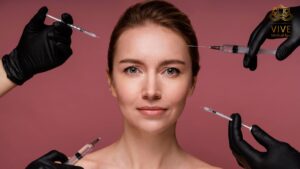
Dermal fillers enhance volume, contour, and facial balance. Many patients ask what occurs beneath the skin months after treatment. Understanding the lifecycle of fillers helps set realistic expectations and supports long-term planning.
Your body interacts with filler material in predictable stages.
Most modern fillers contain hyaluronic acid. This substance exists naturally in your skin and attracts water.
When injected strategically, filler:
The gel integrates into surrounding tissue. Skilled placement ensures smooth blending with natural anatomy.
Immediately after injection, the filler occupies physical space under the skin.
Mild swelling may make results appear fuller than expected.
Hydration within the hyaluronic acid attracts additional water molecules.
Settling occurs gradually during the first two weeks.
Final refinement appears once swelling resolves and integration stabilizes.
The product reaches a stable state during this stage.
Your body begins slow enzymatic breakdown of hyaluronic acid.
Volume remains consistent for most patients.
Collagen stimulation may occur in response to structural support.
Facial expressions continue normally when placement respects anatomy.
Natural enzymes steadily degrade filler molecules.
Macrophages participate in processing the gel components.
Volume reduction happens slowly.
Changes often appear subtle.
Many patients maintain visible improvement during this period.
Longevity depends on several variables:
Some fillers persist longer than expected.
High-movement areas such as lips may metabolize faster.
Cheek and jawline treatments often last longer.
Trace amounts may remain even after visible volume decreases.
Your body continues natural breakdown until full absorption occurs.
Properly placed filler stays where your provider injects it.
Migration rarely occurs when technique respects anatomical planes.
Excessive product or incorrect depth may increase risk.
Qualified injectors minimize complications through precision and training.
Movement concerns often relate to swelling or soft tissue shift rather than actual migration.
Hyaluronic acid fillers attract water and integrate into extracellular matrix.
Enzymes called hyaluronidases gradually break long chains into smaller fragments.
Immune cells process fragments naturally.
The lymphatic system assists with elimination.
This metabolic pathway mirrors natural turnover of hyaluronic acid already present in skin.
Structural support from filler may trigger collagen production.
Fibroblasts respond to mechanical tension within tissue.
New collagen fibers contribute to subtle firmness.
Collagen stimulation varies by individual and injection depth.
Improved skin quality may persist beyond visible filler volume.
Your face returns to its baseline aging process.
Skin does not sag because of discontinued filler.
Volume decreases gradually as metabolism completes.
Many patients maintain improvement for months after last treatment.
Natural aging continues regardless of filler use.
Metabolism plays a significant role.
Higher activity levels may accelerate breakdown.
Smoking can impact skin health and longevity.
Sun exposure affects collagen integrity.
Other important factors include:
Individual biology creates variation.
Hyaluronic acid fillers can dissolve with hyaluronidase.
This enzyme breaks down the gel rapidly.
Providers may use dissolving treatment for:
Reversal offers safety and flexibility.
Strategic maintenance prevents unnatural buildup.
Responsible providers evaluate existing volume before adding product.
Excess layering may distort facial proportions.
Gradual refinement supports balanced, long-term aesthetics.
Periodic assessment ensures natural results.
Maintenance timing depends on area and product.
Common schedules include:
Personal consultation determines ideal intervals.
Subtle touch-ups preserve harmony without dramatic shifts.
Patients sometimes notice fading sooner than actual volume loss.
Lighting and facial movement influence perception.
Memory of immediate post-treatment fullness may alter comparison.
Gradual reduction maintains natural transition.
Routine photography helps track objective changes.
Hyaluronic acid fillers maintain strong safety records.
Qualified injectors reduce risk through anatomical knowledge.
Adverse events remain uncommon with proper technique.
Ongoing education supports safe practice standards.
Commitment to expertise protects patient outcomes.
Dermal fillers follow a natural lifecycle within your body. Integration occurs in the first weeks. Stabilization follows. Gradual metabolism unfolds over months. Complete absorption eventually takes place.
Results evolve slowly, which preserves facial harmony. Strategic maintenance keeps enhancements balanced and refined.
A consultation at VIVE Medical Spa allows personalized evaluation, product selection, and long-term planning tailored to your aesthetic goals.
COME TO TIJUANA TO MEET US
VIVE Medical Spa is a health and beauty clinic located in Tijuana, Mexico, fuve minutes from the US border.
We have the best team of certified doctors, properly trained professional staff, nd the latest technology at the best prices.
TIJUANA OFFICE
101 – 102, Diego Rivera 2351,
Zona Urbana Rio Tijuana,
22010 Tijuana, B.C.
Open Today 9:00am – 6:00pm
CONTACT US
Today

*Disclaimer: results are not guaranteed, may not be permanent, and can vary per individual. Some images are of models, not actual patients.
©2023 Vive Medical Spa | Designed & Developed by Abundiss Services
Sitemap | Privacy Policy | Login

TIJUANA OFFICE
