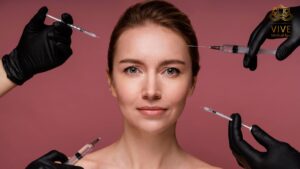
Dermal fillers provide non-surgical rejuvenation, restoring volume, smoothing wrinkles, and enhancing facial contours. Selecting the right filler for each area ensures natural results, safety, and longevity.
Understanding filler types, facial anatomy, and treatment goals helps patients make informed decisions for personalized enhancements.
Common Facial Areas Treated with Fillers
Fillers target specific facial regions:
- Cheeks: Restore volume, lift midface, and improve contours
- Lips: Enhance fullness, definition, and symmetry
- Nasolabial folds: Smooth lines from nose to mouth corners
- Marionette lines: Reduce lines running from mouth corners to chin
- Under-eye hollows: Improve tear troughs and reduce shadowing
- Jawline and chin: Define contours and enhance facial balance
Selecting the appropriate filler for each area maximizes safety and effectiveness.
Types of Dermal Fillers
Fillers vary based on composition, thickness, and duration:
- Hyaluronic Acid (HA) Fillers: Versatile, temporary, smooth, and safe; ideal for lips, cheeks, and fine lines
- Calcium Hydroxylapatite: Thicker, longer-lasting; suitable for cheeks and jawline enhancement
- Poly-L-lactic Acid: Stimulates collagen production; used for volume restoration in cheeks and temples
- Polymethylmethacrylate (PMMA): Semi-permanent; appropriate for deeper folds and long-term correction
- Fat Transfer: Autologous option using own fat; requires minor procedure and provides long-lasting results
Each type has specific applications based on tissue depth, mobility, and patient goals.
Matching Filler to Facial Area
Considerations for each area:
- Cheeks: Thicker fillers provide lift and projection
- Lips: Softer, flexible fillers create natural movement
- Nasolabial folds: Medium-density fillers smooth lines without excess volume
- Under-eye: Very soft, smooth fillers reduce hollows without puffiness
- Jawline and chin: Firm fillers enhance definition and contour
Understanding facial anatomy ensures precise placement and optimal aesthetic outcomes.
Factors Influencing Filler Choice
Several factors affect selection:
- Skin thickness and elasticity
- Volume loss and age-related changes
- Desired longevity of results
- Mobility of facial area (e.g., lips vs. cheeks)
- Patient lifestyle and expectations
Customized plans maximize safety, comfort, and satisfaction.
Procedure Overview
Filler treatments typically include:
- Consultation and facial assessment
- Marking treatment areas for symmetry and accuracy
- Cleansing and numbing to minimize discomfort
- Precise injection using appropriate technique and depth
- Immediate evaluation of results and adjustments if necessary
Most treatments take 30–60 minutes with minimal downtime.
Safety and Side Effects
Common side effects are temporary:
- Mild swelling or redness
- Bruising at injection sites
- Minor tenderness or itching
Patients should report unusual pain, lumps, or prolonged swelling to their provider. Choosing the right filler and an experienced injector reduces risks significantly.
Longevity and Maintenance
Results vary depending on filler type and area:
- Hyaluronic acid: 6–12 months
- Calcium hydroxylapatite: 12–18 months
- Poly-L-lactic acid: Gradual improvement over months, lasting up to 2 years
- PMMA: Semi-permanent, may require touch-ups
- Fat transfer: Long-lasting if proper technique and care are followed
Follow-up treatments maintain results and ensure balanced, natural-looking enhancements.
Questions to Ask Your Provider
Patients should ask:
- Which filler is best for my facial area?
- How long will results last?
- Are there alternatives for longer-lasting or temporary effects?
- What side effects should I expect?
- How can results appear natural and symmetrical?
Clear communication ensures personalized, safe, and satisfying outcomes.
Final Thoughts
Choosing the right filler for each face area ensures natural, balanced results while minimizing risks. Consider anatomy, filler type, treatment goals, and expert guidance.
Consultation at VIVE Medical Spa provides individualized assessment, precise filler selection, and professional treatment planning to achieve safe, effective, and long-lasting facial rejuvenation.