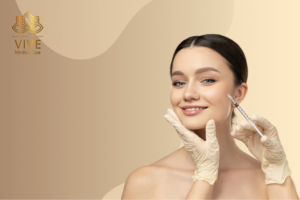
Botox is one of the most popular non-surgical cosmetic treatments for reducing dynamic wrinkles. Although millions of treatments are performed every year, many patients wonder what actually happens to their muscles after the injections.
Contrary to common misconceptions, Botox does not damage muscles or permanently paralyze them. Instead, it temporarily changes how certain muscles receive signals from nearby nerves, allowing wrinkles to soften while preserving natural facial function when administered correctly.
Here’s what happens beneath the surface after a Botox treatment.
How Botox Works
Botox is the brand name for botulinum toxin type A, a purified protein used in very small, controlled doses.
Its primary function is to temporarily block communication between nerves and specific muscles.
Normally:
- The brain sends a signal through motor nerves.
- The nerve releases acetylcholine.
- The muscle contracts.
After Botox is injected, the release of acetylcholine is temporarily reduced, preventing the muscle from contracting as strongly.
What Happens Immediately After the Injection?
Right after treatment, the muscle continues to function normally.
The medication needs time to bind to the nerve endings before it begins working.
Most patients notice:
- No immediate change
- Mild redness or swelling at injection sites
- Normal facial movement during the first day
The treatment gradually becomes effective over the following days.
When Do the Muscles Start Relaxing?
Most patients begin noticing changes within:
- 3–5 days: Early muscle relaxation
- 7–10 days: Visible reduction in muscle movement
- 10–14 days: Full treatment effect
The exact timeline varies depending on the individual and the treatment area.
Why Wrinkles Become Less Visible
Many facial wrinkles form because muscles repeatedly fold the skin during expressions such as:
- Smiling
- Frowning
- Squinting
- Raising the eyebrows
When Botox relaxes these muscles:
- Skin folds less during movement.
- Existing dynamic wrinkles become softer.
- New expression lines are less likely to deepen.
The skin itself is not being filled—it simply experiences less repetitive folding.
Do the Muscles Become Weak?
Yes, but only temporarily and only in the treated muscles.
Botox creates a controlled reduction in muscle activity rather than complete paralysis.
This temporary weakening:
- Reduces excessive contraction
- Maintains surrounding muscle function
- Allows natural facial expressions when properly administered
The goal is muscle relaxation, not an expressionless appearance.
Does Botox Cause Muscle Atrophy?
Muscles that remain inactive for long periods can become slightly smaller, a process known as muscle atrophy.
With cosmetic Botox:
- Any decrease in muscle size is usually mild.
- It develops gradually with repeated treatments.
- It is generally reversible if treatments are discontinued.
In some cases, this effect can even contribute to a slimmer appearance, such as when treating enlarged jaw muscles (masseters).
Will the Muscles Return to Normal?
Yes.
Over time, nerve endings regenerate their ability to release acetylcholine.
As communication is restored:
- Muscle activity gradually returns.
- Facial movement increases.
- Wrinkles slowly reappear if additional treatments are not performed.
Botox does not permanently alter muscle function.
How Long Does the Effect Last?
For most cosmetic treatments, Botox lasts approximately:
- 3 to 4 months for most facial areas
Duration varies depending on:
- Individual metabolism
- Muscle strength
- Treatment area
- Dose administered
- Frequency of treatments
Some patients notice slightly longer-lasting results after consistent maintenance.
Can Botox Prevent Wrinkles?
One of Botox’s preventive benefits is reducing repetitive muscle movement.
By limiting constant skin folding:
- Fine lines may develop more slowly.
- Existing expression lines can remain softer.
- Long-term wrinkle formation may be delayed.
This is why many younger adults choose preventive Botox before deeper wrinkles develop.
Is It Safe for the Muscles?
When performed by qualified medical professionals, Botox has an excellent safety profile.
Proper treatment:
- Targets specific muscles precisely
- Uses carefully calculated doses
- Preserves facial balance
- Avoids unnecessary muscle weakness
A personalized approach is essential for achieving natural-looking results.
Final Thoughts
After Botox, the treated muscles temporarily relax because nerve signals that trigger contraction are reduced. This relaxation softens expression lines while allowing the muscles to gradually regain normal function over the following months. When performed correctly, Botox does not permanently damage muscles or prevent natural facial expressions.
At VIVE Medical Spa, every Botox treatment is customized to each patient’s facial anatomy, muscle activity, and aesthetic goals. Our focus is on achieving refreshed, natural-looking results while preserving facial harmony and expression.