

Botox is one of the most well-known aesthetic treatments in the world, trusted by millions of patients to reduce the appearance of facial wrinkles and prevent new expression lines from becoming more noticeable. While many people know what Botox does, fewer understand how it works at the biological level.
The answer lies in a tiny but essential structure known as the neuromuscular junction—the point where nerves communicate with muscles.
Understanding this process can help explain why Botox produces temporary, predictable results and why it has become such an effective treatment for dynamic wrinkles.
The neuromuscular junction is the connection between a motor nerve and a muscle fiber.
Every time you smile, frown, squint, or raise your eyebrows, your brain sends an electrical signal through a motor nerve. When that signal reaches the neuromuscular junction, it triggers the release of a chemical messenger called acetylcholine.
Acetylcholine binds to receptors on the muscle, causing it to contract.
This sequence happens in milliseconds and allows your facial muscles to create expressions naturally.
Facial expressions are an essential part of communication.
Every smile, laugh, or expression of surprise activates specific facial muscles.
Over time, thousands of repeated contractions begin to leave visible marks on the skin. Initially, these wrinkles appear only during movement and are known as dynamic wrinkles.
As collagen and elastin naturally decline with age, these lines may eventually remain visible even when the face is at rest, becoming static wrinkles.
Botox is a purified protein derived from Clostridium botulinum. In aesthetic medicine, it is used in carefully controlled doses to temporarily reduce muscle activity.
Rather than affecting the muscle directly, Botox acts at the neuromuscular junction.
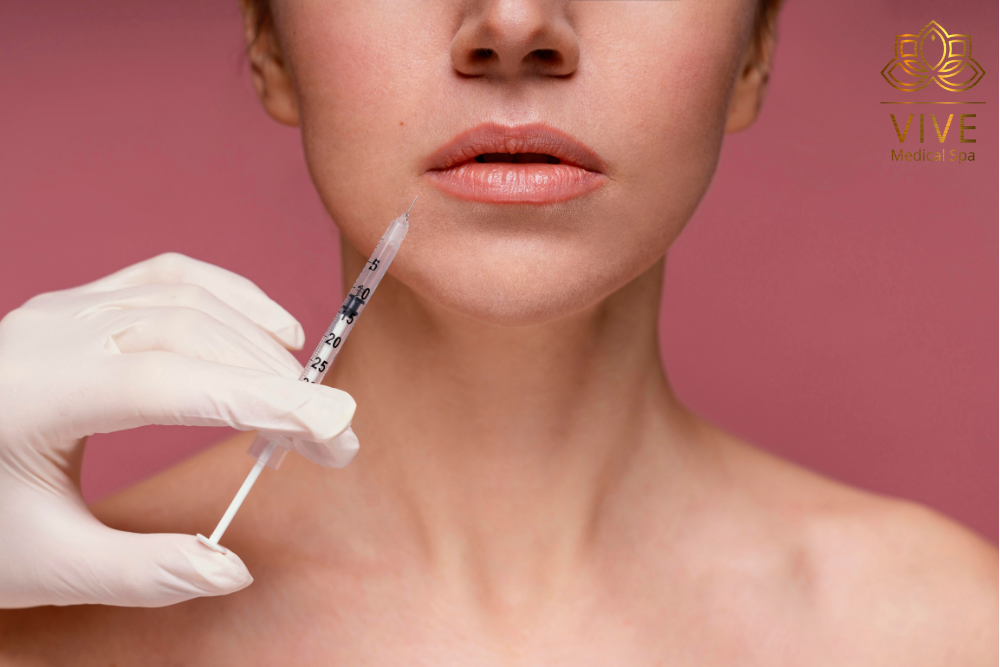
After injection, Botox enters the nerve ending and blocks the release of acetylcholine.
Without acetylcholine, the nerve cannot effectively signal the muscle to contract.
As a result:
Importantly, Botox does not damage the nerve or muscle. It temporarily interrupts communication between them.
One of the most common questions patients ask is why Botox eventually wears off.
The answer lies in the body’s remarkable ability to adapt.
Over time, the nerve creates new communication pathways and gradually restores its ability to release acetylcholine. Once this happens, normal muscle activity slowly returns.
Because of this natural process, Botox is considered a temporary treatment.
For most patients, results typically last around 3 to 4 months, although the exact duration varies depending on factors such as the treatment area, dosage, muscle strength, and individual metabolism.
Botox does not work immediately.
Following treatment, several biological changes occur before visible results appear.
The medication begins interacting with nerve endings and reducing acetylcholine release.
Most patients notice little or no visible change during this stage.
Muscle activity gradually decreases.
Wrinkles caused by facial movement begin to soften, and the treated area often appears smoother while still allowing for natural facial expression when properly administered.
Botox is most effective for dynamic wrinkles, which develop from repeated muscle movement.
Common treatment areas include:
Static wrinkles that remain visible at rest may require additional treatments depending on their depth and cause.
One of the biggest misconceptions about Botox is that it always produces a frozen appearance.
In reality, modern aesthetic practice emphasizes natural-looking movement.
An experienced injector carefully evaluates:
The objective is typically to soften excessive muscle activity while preserving balanced facial expressions.
Botox has been studied extensively for both medical and cosmetic applications.
When administered by qualified healthcare professionals, it has an established safety profile and has been used worldwide for decades.
As with any medical treatment, patient selection, proper dosing, and injection technique are essential to achieving safe and predictable outcomes.
A consultation with a trained provider helps determine whether Botox is appropriate based on your medical history, facial anatomy, and treatment goals.
Although Botox is widely recognized for reducing facial wrinkles, its ability to temporarily relax muscles has led to many additional medical applications.
Depending on the patient, Botox may also be used to help manage conditions such as:
These applications are based on the same biological principle: temporarily reducing communication between nerves and muscles.
Knowing how Botox works helps set realistic expectations.
Rather than filling wrinkles or changing skin structure, Botox temporarily reduces the muscle contractions that contribute to expression lines.
This makes it an effective option for patients seeking a minimally invasive way to soften dynamic wrinkles while maintaining a natural appearance.
Botox works by temporarily blocking the release of acetylcholine at the neuromuscular junction, reducing the muscle contractions that cause dynamic wrinkles. This highly targeted mechanism allows facial muscles to relax, helping smooth expression lines without affecting the skin itself. As the body gradually restores nerve communication, muscle activity returns and future treatments may be considered to maintain results.
At VIVE Medical Spa, every Botox treatment begins with a personalized consultation and facial assessment. Our experienced providers focus on enhancing your natural features with precise, individualized treatment plans designed to achieve refreshed, balanced, and natural-looking outcomes.
COME TO TIJUANA TO MEET US
VIVE Medical Spa is a health and beauty clinic located in Tijuana, Mexico, fuve minutes from the US border.
We have the best team of certified doctors, properly trained professional staff, nd the latest technology at the best prices.
TIJUANA OFFICE
101 – 102, Diego Rivera 2351,
Zona Urbana Rio Tijuana,
22010 Tijuana, B.C.
Open Today 9:00am – 6:00pm
CONTACT US
Today

*Disclaimer: results are not guaranteed, may not be permanent, and can vary per individual. Some images are of models, not actual patients.
©2023 Vive Medical Spa | Designed & Developed by Abundiss Services
Sitemap | Privacy Policy | Login

TIJUANA OFFICE
